Six Years From Sketch Pad to Takeoff
Air New Zealand has been dangling the Skynest in front of travelers since before the pandemic reshuffled everything we expect from long-haul flying. The concept is deceptively simple: bunk beds for economy passengers on ultra-long-haul routes. Getting it off the ground took the airline more than six years.
Now it’s real. The airline recently unveiled a full-scale model in New York City, letting journalists climb in, stretch out, and decide for themselves whether sleeping in a shared pod at 35,000 feet was a genuine upgrade or a gimmick. The verdict from nearly everyone who tried it: surprisingly good.
A Pod, Not a Penalty Box
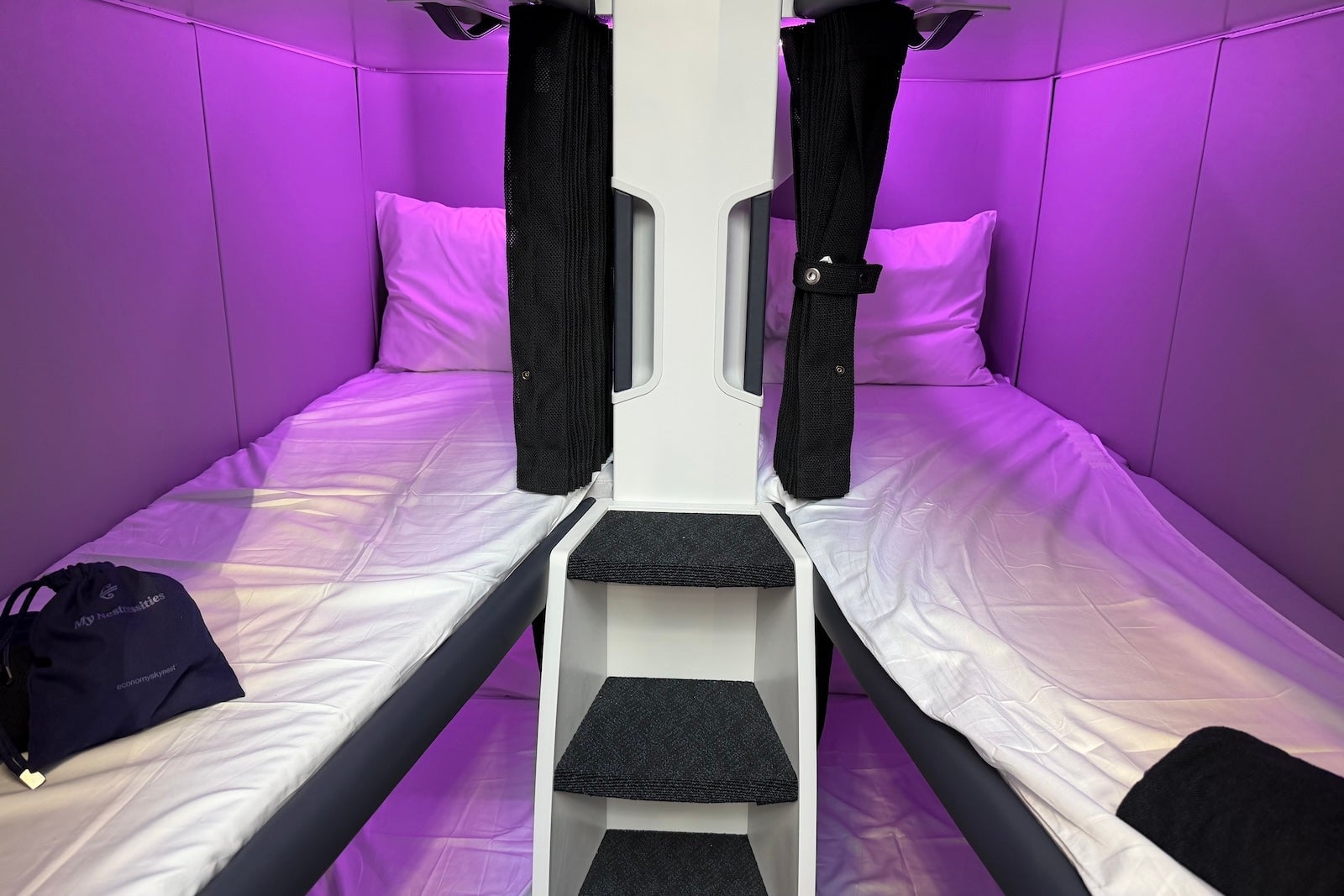
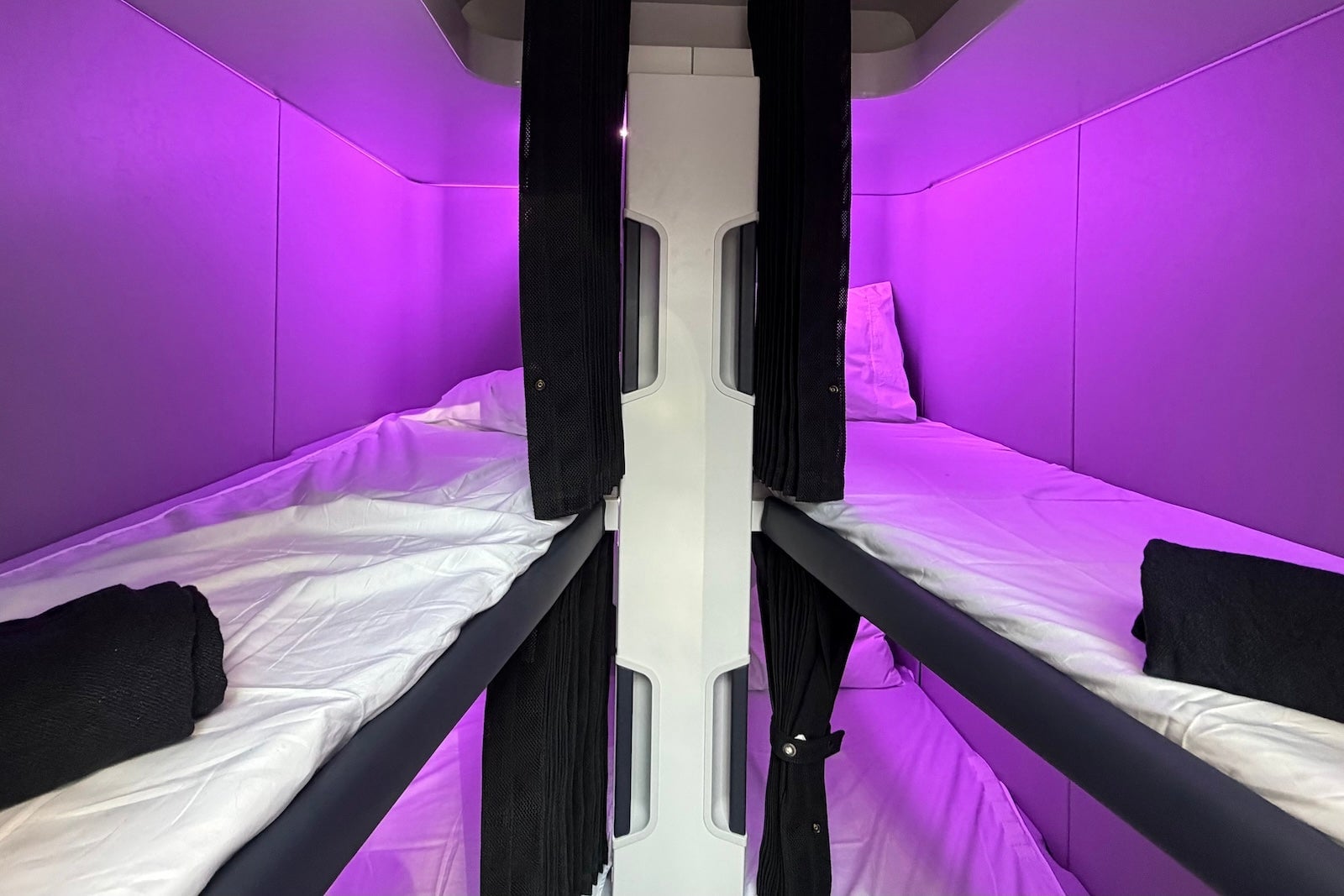
The Skynest holds six beds — three stacked on each side of a central ladder. Each bunk runs 6 feet 6 inches long and roughly 25 inches wide at the shoulders, tapering toward the feet. That’s tight. But once you’re horizontal, the purple ambient lighting and white bedding make it feel more like a berth on a European night train than a camping cot bolted to a fuselage.
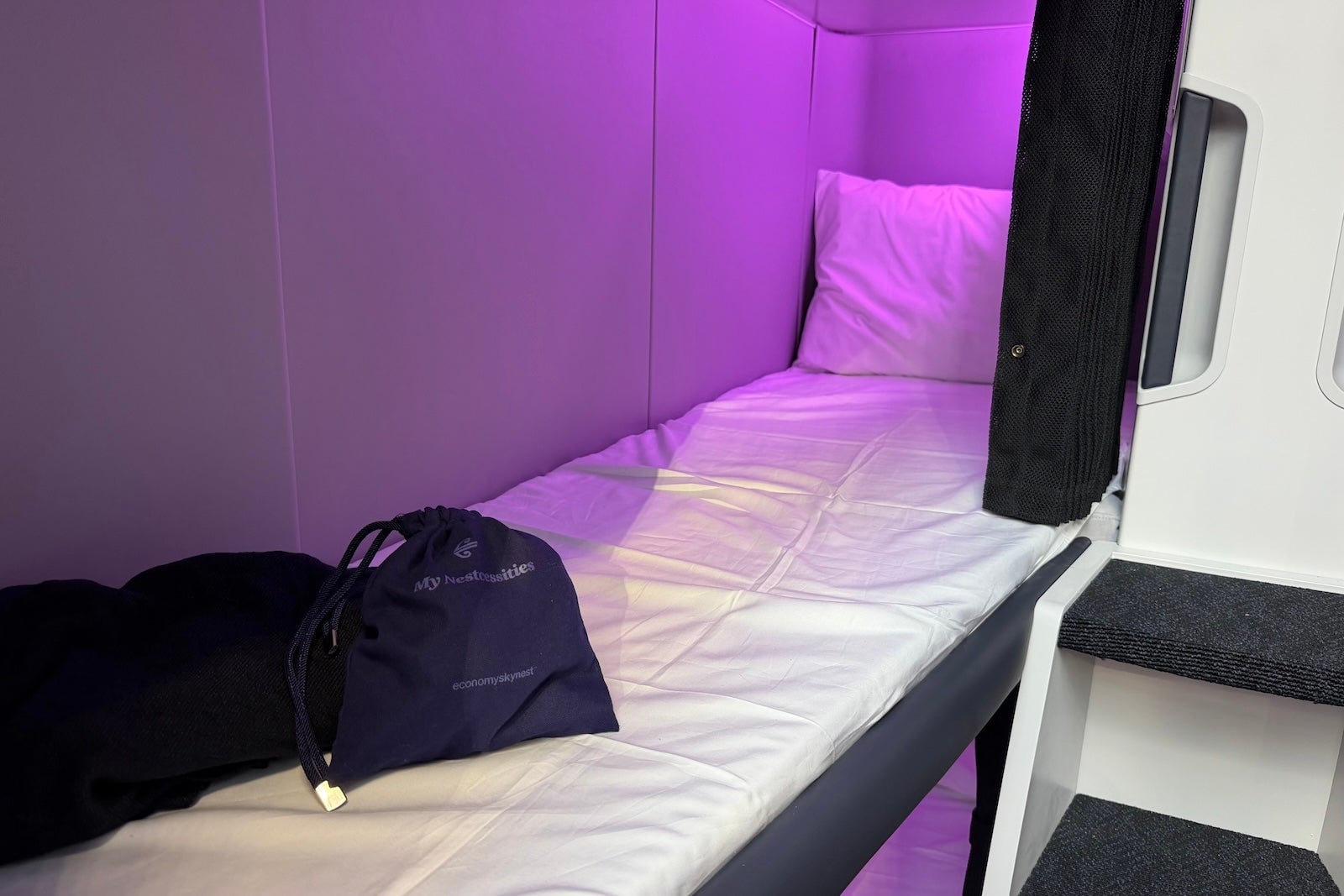
Every bunk comes with fresh linens, a pillow, a blanket, and a kit the airline calls “Nestcessities” — eye mask, earplugs, socks (shoes are banned inside), skincare from New Zealand brand Aotea, and a dental kit. USB-A and USB-C charging ports are built into each pod. The small details are considered.
Read more
The Bottom Bunk Wins Every Time
At floor level, the bottom bunk requires zero climbing and feels roomier than it has any right to. The top bunk is exactly as awkward to enter as it sounds — an ungainly scramble on a moving aircraft — but comfortable once you’re settled. One person at the New York preview stood 6 feet 4 inches and could lie fully flat, though with almost no margin to spare.
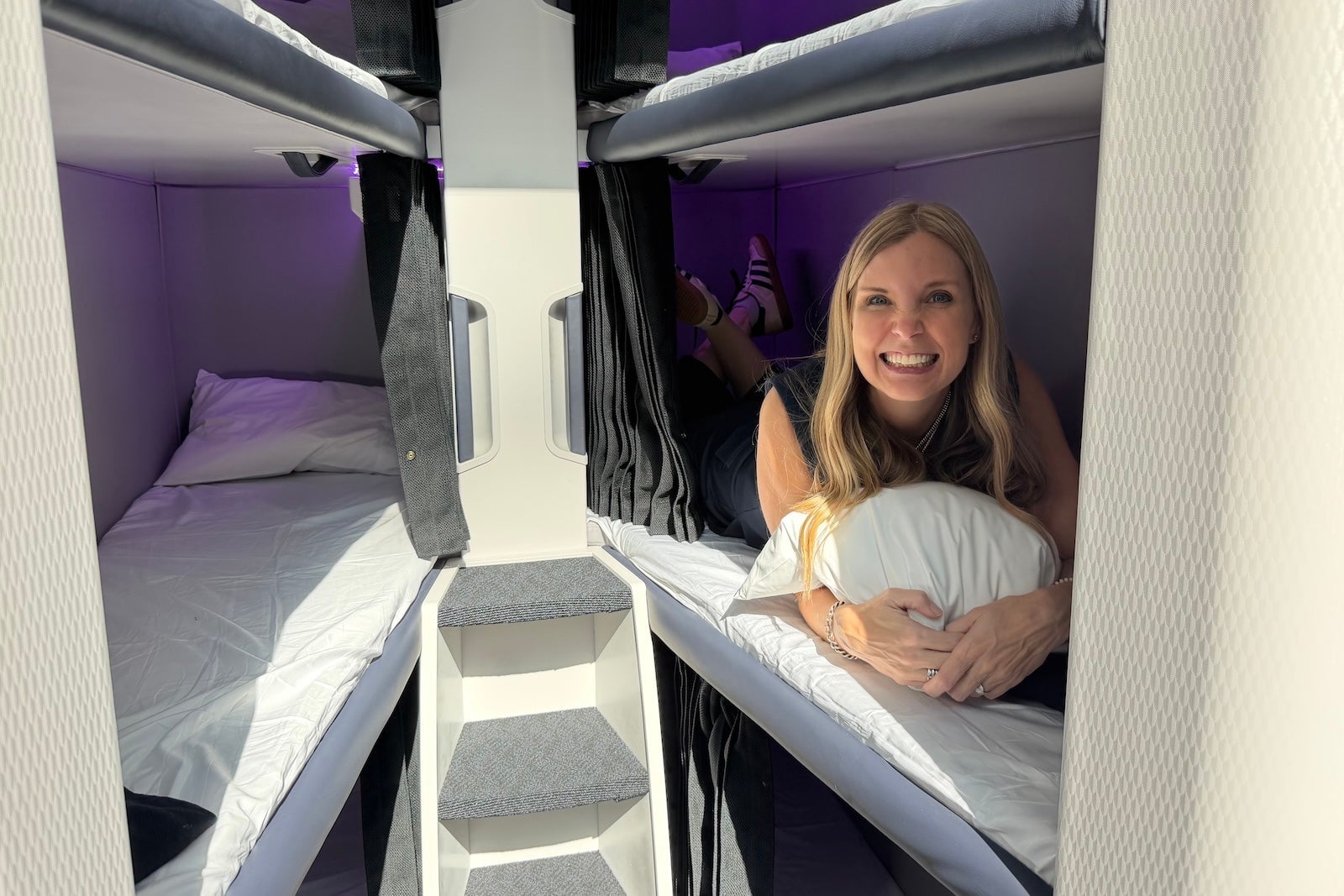
Four hours lying flat beats 18 hours wedged upright in a middle seat.
The mattress is real, not a padded shelf. The fit is snug. But the payoff — actual horizontal rest on an 18-hour transpacific haul — is hard to argue with.
Rules of the Pod
Privacy is the Skynest’s live question. Six strangers sleeping in close quarters means shared air, shared sounds, and shared accountability. The rules are firm: no food, no audio without headphones, no shoes, and minimize climbing in and out during your four-hour window. Bring noise-canceling headphones. Bring earplugs as backup in case your bunkmate snores.
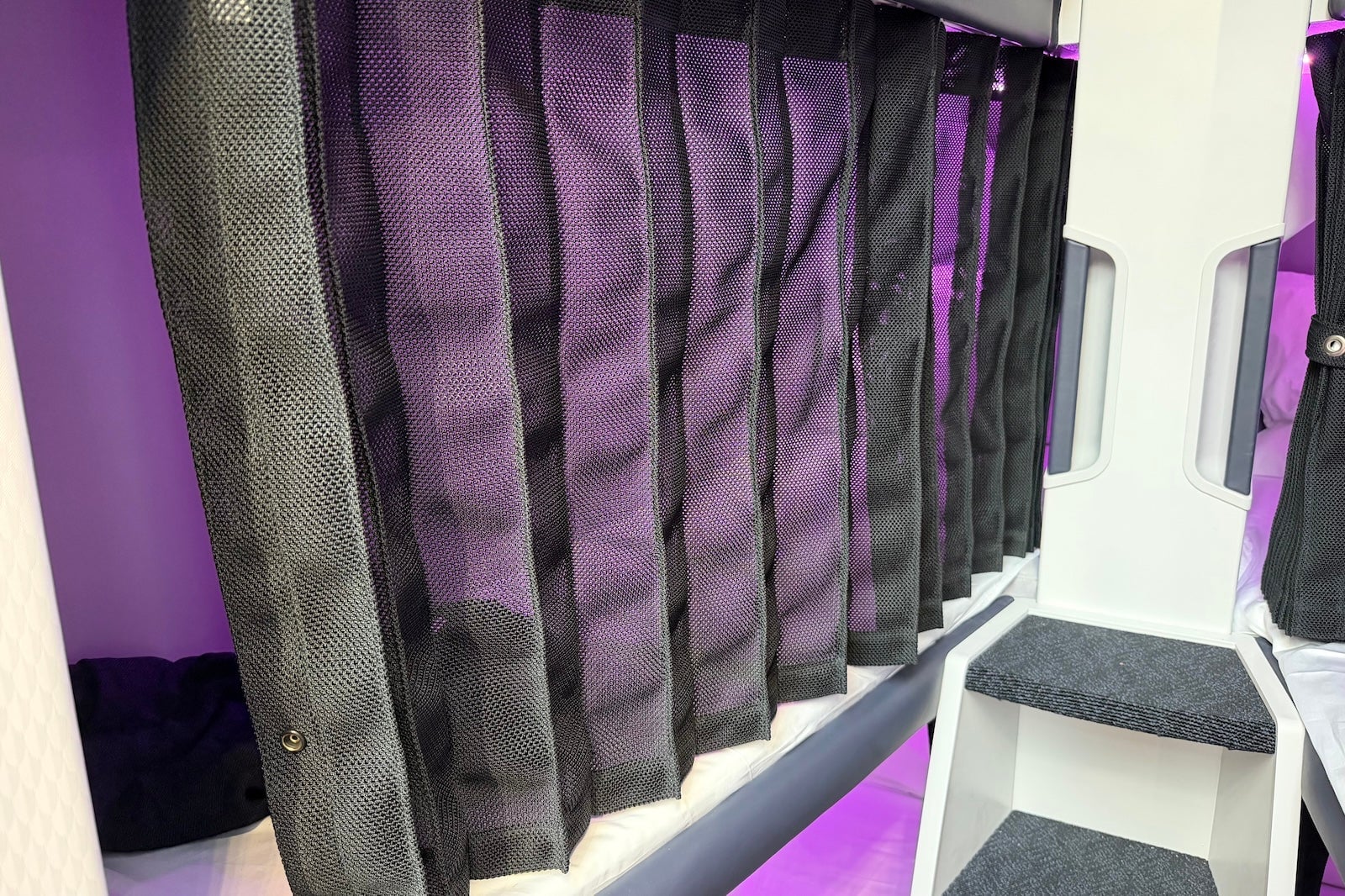
When your time is up, the lights in your pod slowly brighten — a gentler wake-up than the cabin lights snapping on at meal service. If the gradual glow doesn’t rouse you, a flight attendant will tap your feet. Then it’s back to your regular economy seat, theoretically rested and with clean teeth.
What It Costs and When It Flies
The Skynest will sit in the center of the economy cabin on select Boeing 787 Dreamliners, occupying the space that would normally hold a galley and a three-seat row. Any passenger aged 15 or older booked in economy or premium economy can reserve a block. The price is $495 for four hours.
Booking opens May 18. The first Skynest flights will operate between John F. Kennedy International Airport and Auckland starting in November 2026 — one of the longest routes in commercial aviation, running 17 to 18 hours each way. That’s exactly the kind of flight this was built for.