
Why Rio Eats Backpackers Alive in the Best Way
Rio de Janeiro hits you before you even check in anywhere. The mountains drop straight into the Atlantic. The city roars. Founded by the Portuguese in the 16th century on land indigenous peoples had called home for millennia, Rio is now Brazil’s second-largest city — and one of the most visited in the entire Southern Hemisphere, pulling over five million visitors a year through its gates.
Bossa nova was born here. Carnaval happens here. The beaches of Copacabana and Ipanema are famous enough that people who have never left their hometown know the names. Christ the Redeemer watches over all of it from the top of Corcovado, arms wide. With that kind of energy, it’s no surprise the hostel scene is massive — and genuinely competitive. These six are the ones worth your time.

The Copacabana Hostel That Actually Feels Like Home
A few blocks from Copacabana’s four kilometers of sand and promenade, this hostel draws travelers who want to be near the action without drowning in it. The staff is warm in a way that doesn’t feel performative — they run group hikes and tours, keep a WhatsApp group buzzing with plans, and there’s a hostel dog who treats every new arrival like an old friend.
The pod-style bunks come with privacy curtains, individual reading lights, dedicated sockets, and large lockers. Every dorm opens onto a balcony. Female-only rooms are available. A co-working space and an on-site gym set it apart from the standard hostel formula, and the rooftop terrace looks out over the ocean with the kind of view you’d pay extra for at a hotel.
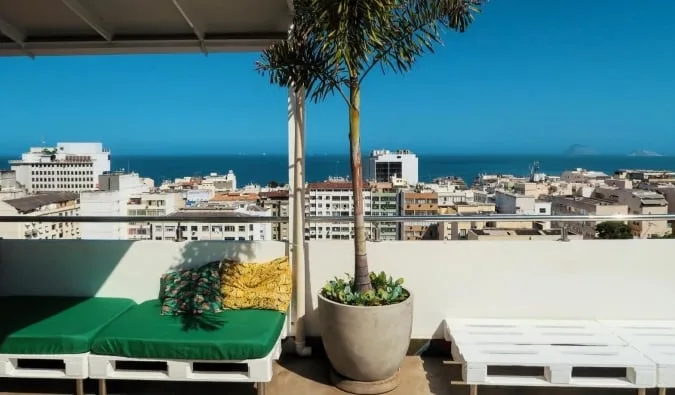
The one catch: it sits at the top of a steep hill. Cheap motorbike taxis wait at the bottom to shuttle you up, so it’s not a deal-breaker — just something to know before you arrive with a 20-kilo bag and optimistic energy. A fully equipped kitchen and complimentary buffet breakfast, including homemade bread, make the budget math work out nicely.
Read more
Latin America’s Best Hostel Lives in a Colonial Building in Lapa
This one has won awards — not just in Rio, not just in Brazil, but across all of Latin America, year after year. It’s housed in a restored colonial building with enough character that you’d want to photograph it even if you weren’t staying there. A metro station sits at the end of the block. The neighborhood of Lapa, famous for nightlife and samba clubs, is a short walk away.
The staff organize nightly events, which means the social calendar practically runs itself. An extensive buffet breakfast in the mornings and happy hour in the evenings make stretching a budget genuinely easy. Privacy curtains, individual lights, and sockets come standard across the rooms.
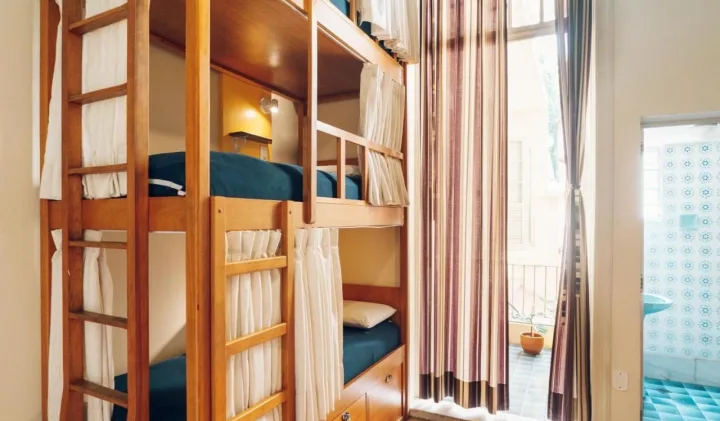
One honest warning: some rooms have three-tier bunk beds — avoid those if you can. The water pressure is excellent, a small miracle in a city where it often isn’t. The Wi-Fi is inconsistent, which matters if you’re working remotely. For everyone else, it barely registers as a problem.
Pura Vida Is Where You Go to Not Sleep
Wedged between Ipanema and Copacabana, Pura Vida runs on organized chaos and makes no apologies for it. Karaoke nights, boat tours, a packed hostel bar, and staff who treat socializing as a professional obligation — this is the kind of place you leave having made a dozen friends whose last names you never learned.
The metal bunks are basic. No privacy curtains, no individual lights, no power outlets at the bed. Dorms don’t have air conditioning (private rooms do). Female-only dorms are available. There’s a large communal kitchen and a small breakfast each day, though you’ll pay extra for it. The draw isn’t the amenities — it’s the atmosphere, and that part delivers.
One thing that deserves a straightforward mention: the hostel sits right at the entrance to one of Rio’s favelas. Safety conditions vary significantly across different communities, but extra caution is warranted, especially at night. Don’t walk back alone after dark. That’s not a reason to avoid it — it’s just Rio, and awareness goes a long way.
Selina Brings the Boutique Hotel Energy to Budget Travel
Selina is a global chain that has made a bet on the idea that backpackers don’t want to feel like backpackers. In Rio, that bet mostly pays off. The common areas are generous: a rooftop terrace, a restaurant, a cocktail bar where a welcome drink is waiting when you arrive, a kitchen, a cinema room, and a proper coworking space.
The rooms are clean, modern, and air-conditioned. Beds are new, mattresses are comfortable, and each bunk has individual lighting, a power outlet, and under-bed storage. It’s the most polished option on this list — which, depending on what you’re after, is either exactly what you want or a little too sterile.

Mambembe: Cats, Hammocks, and a Hill in Santa Teresa
Santa Teresa is the kind of neighborhood that attracts artists and people who romanticize artists, and Mambembe fits right in. An old mansion converted into a hostel, it leans hard into the eclectic — art covering the walls, a music room stocked with instruments anyone can play, and resident cats who have fully claimed the common areas as their own.
Bunks have curtains, lockers, outlets, and reading lamps, though some rooms do have three-tier configurations. The space is kept clean without feeling institutional. Hammocks hang in the outdoor areas. There’s an indoor TV lounge and a sundeck, and the vibe is social without tipping into party hostel territory. If you need a night of sleep, you’ll get one. If you want to stay up talking until 2am, that’s available too. The steep hill up to it is real — budget your legs accordingly.
Books Hostel: Murals, Barbecue, and a British Invasion
Also in Santa Teresa, Books runs a different kind of show. The interior is covered in murals. The crowd skews British and decidedly committed to having a good time. Happy hour kicks off the evening at the downstairs bar, and the energy rarely drops before midnight.
The communal spaces are genuinely good — a barbecue area, a small kitchen, a library, a TV room with Netflix and a PS4. A free vegetarian breakfast arrives every morning, which is a welcome shock after a late night. The wooden bunk beds are sturdier and more comfortable than they have any right to be, with solid pillows included. Privacy curtains, individual lights, and sockets are absent, but air conditioning is present in most rooms. The showers always run hot, which in Rio is never guaranteed. And despite the revolving door of guests, it stays clean — a testament to staff discipline that any traveler who’s seen the alternative will appreciate.
Rio rewards the traveler who comes prepared. Pick the hostel that matches your speed — quiet mornings by the ocean, late nights in Lapa, or hammock afternoons in Santa Teresa — and the city opens up differently for each. The right base changes everything.