
The Stubborn Math at the Heart of It All

Every four years, February gets one extra day and millions of people lose their minds about it. But leap years aren’t a quirk or a glitch. They’re a patch — temporal duct tape slapped over a problem that has frustrated mathematicians, emperors, and popes for roughly two millennia.
The issue is elegant and infuriating: it takes the Earth exactly 365.24219 days to circle the sun. Not 365. Not 366. That .24219 is close enough to one-quarter that ancient thinkers figured they could bank it up and cash it in every four years. One extra day. Problem solved. Except it wasn’t.
Caesar’s Big Idea Wasn’t Even His

Julius Caesar gets credit for the calendar that bears his name, but he deserves maybe a quarter of it. The real architect was Sosigenes of Alexandria, a Greek astronomer Caesar recruited around 48 BCE — conveniently during the same Egyptian trip where he was chasing a political rival and, on the side, falling for Cleopatra. Caesar had the power. Sosigenes had the math.
Before the Julian calendar launched on January 1, 45 BCE, Caesar added 67 days to the previous year to square the books. That year became the longest in recorded history. Then, immediately after this heroic reset, Roman priests misread Sosigenes’ instructions and started inserting leap years every three years instead of four. Caesar’s nephew Augustus had to quietly correct the mess over the following decades.
Read more
Why Leap Years Don’t Actually Happen Every Four Years
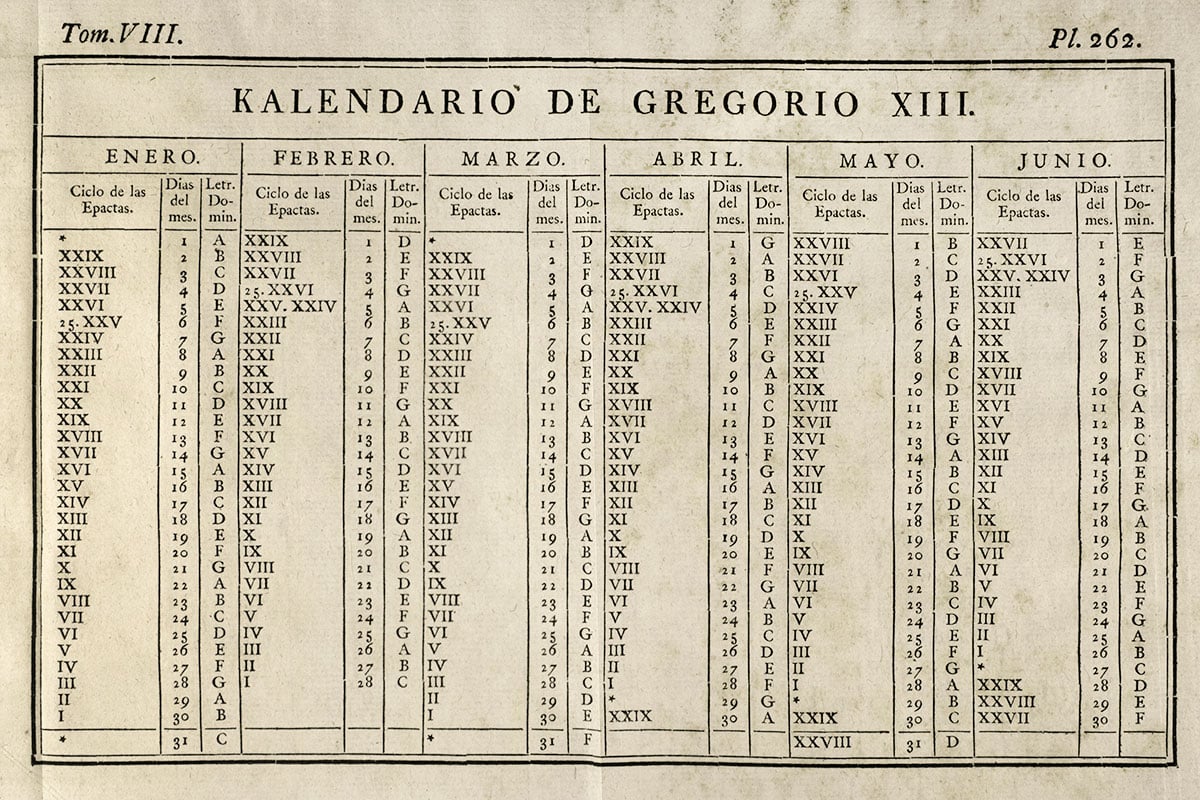
Here’s where the Julian calendar’s subtle flaw compounds into something real. Sosigenes’ system pegged the year at 365.25 days — close, but 11 minutes too long. Eleven minutes a year sounds harmless. Over centuries, it isn’t. By the 1500s, the Julian calendar had drifted a full 10 days behind the actual solar year as it had stood in 325 CE, when the Council of Nicaea tied Easter to the spring equinox. Ten days off means your religious holidays are increasingly seasonal fiction.
Pope Gregory XIII was not amused. Like Caesar before him, he was not the mathematician in the room — he hired Italian scholar Aloysius Lilius and German mathematician Christopher Clavius to work it out. Their fix was a rule that sounds bureaucratic but is genuinely clever: any year divisible by 100 skips the leap year, unless it’s also divisible by 400. So 2000 was a leap year. The years 1700, 1800, and 1900 were not. Neither will 2100 be. This shaved enough time off the average year to bring the Gregorian calendar much closer to orbital reality.
Close Enough Is Still Not Perfect
The Gregorian calendar runs 365.2425 days on average. Earth’s actual orbit: 365.24219. The gap is tiny — about 26 seconds per year — but it accumulates. By the year 4818, whoever or whatever is living here will face a calendar drift of one full day and a choice about what to do with it. That’s someone else’s problem.
Less abstract: scientists have also had to add 27 leap seconds to the clock over the past 50 years, because Earth doesn’t rotate at a perfectly uniform rate. Earthquakes, tidal forces, and wind patterns all nudge the length of a day in small, irregular ways. When the discrepancy grows large enough, atomic clocks have to tick to 23:59:60 before flipping to midnight. In 2015, global markets paused trading over a single added second. The scientific community has since agreed to retire the practice of adding leap seconds by 2035.
The Rarest Birthday on the Planet
About 5 million people worldwide were born on February 29. The odds are 1 in 1,461 — long but not impossible, as the Keogh family of Ireland proved three times over. Grandfather Peter Anthony was born on leap day in 1940. His son Peter arrived on February 29, 1964. His granddaughter Bethany was born on February 29, 1996. Three generations, one shared birthday that shows up every four years.
These people — called leapers, leaplings, or leapsters — typically celebrate on February 28 or March 1 in non-leap years. Scotland has historically believed that being born on leap day means a life of untold suffering. The Keogh family, thankfully, is Irish.
The Proposal Tradition That Didn’t Age Well
Ireland observes Bachelor’s Day on February 29, a tradition encouraging women to propose marriage to men. That’s relatively harmless fun. The American version of the same idea was not.
In the U.S., leap day was framed in advertisements as the one day aggressive, lovesick women could use their 24 hours of special power to trap unsuspecting bachelors. Women were installed in civic jobs typically held by men — the implication being that gender-swapping for a single day was both charming and temporary. The tradition faded quietly as marriages became more equal through the 1970s. Greece took a different approach entirely, considering any marriage performed on leap day to be bad luck.
One Town in Texas Decided to Celebrate
Not every leap year tradition has baggage. Anthony, Texas — population small, ambition large — declared itself the Leap Year Capital of the World and built a festival around it. The whole thing started in 1988 when two neighbors, Mary Ann Brown and Birdie Lewis, both born on February 29, brought the idea to the town’s Chamber of Commerce. The chamber said yes.
Every four years, the festival kicks off with an exclusive birthday party for leaplings on February 29, then spills into two days of music, food, and general celebration at Anthony Municipal Park. People travel from around the world to attend. It is, against all odds, a genuinely good time — proof that the strangest quirk in the calendar can still throw a decent party.