When the Music Stops — But Not How You’d Expect
Popular music has always operated like a ruthless meritocracy. Artists rise, dominate, then gradually retreat to smaller stages — county fairs, casino showrooms, regional tours. A handful of acts, your Paul McCartneys and Beyoncés, somehow never lose their grip. But 2018 was a particularly notable year for high-profile exits. Several major names — some at the peak of their legacy, others still mid-career — quietly stepped back from the spotlight. Some had no choice. Others were simply done. Here’s what actually happened to each of them.
Neil Diamond’s Sudden and Permanent Exit
Neil Diamond had been performing for so long that his retirement felt almost unthinkable. He got his start as a songwriter in the 1960s — he wrote “I’m a Believer” for the Monkees — before becoming a pop and soft rock star in his own right with songs like “Sweet Caroline,” “Cracklin’ Rosie,” and “America.” Despite not charting a top-40 hit in over 35 years, Diamond remained a top-tier touring act well into his 70s. Then on January 22, 2018 — two days before his 77th birthday — he announced a diagnosis of Parkinson’s disease, a progressive neurological condition that had made large-scale travel and performance no longer viable. Diamond said he would continue writing and recording, but his touring days were finished. The announcement reframed his entire final run of shows as, unknowingly, a farewell.
Read more
Kenny Rogers Wrapped Up Everything Deliberately
Kenny Rogers didn’t disappear — he planned his exit. The singer, who turned 80 in 2018, had been a fixture in country and pop music since the late 1960s, first as lead vocalist for the First Edition on the psychedelic hit “Just Dropped In (to See What Condition My Condition Was In),” then as a solo superstar with crossover hits like “Lady,” “She Believes in Me,” and “Islands in the Stream.” He also starred in a series of TV movies built around “The Gambler” and co-founded the Kenny Rogers Roasters restaurant chain. In late 2016, Rogers told Billboard he was wrapping things up — no more recording, one last tour. “Every goal I’ve set, I’ve done that,” he said, citing a desire to spend time with his twin teenage boys. He canceled the final dates of “The Gambler’s Last Deal” tour in April 2018, and went quiet. This was a retirement executed on his own terms.
Adele Was Sidelined by Her Own Voice
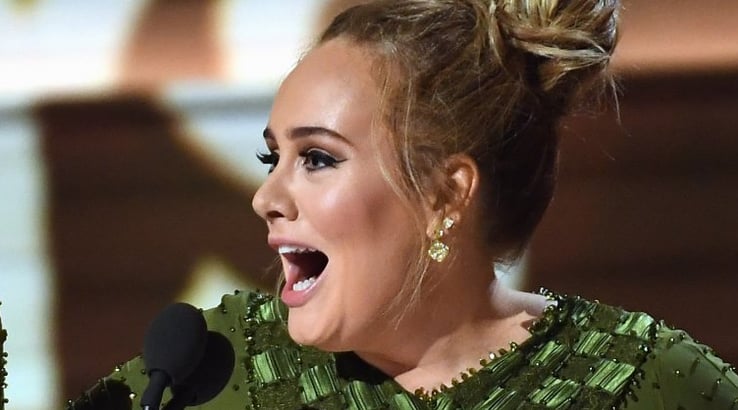
Adele’s commercial dominance in the 2010s was essentially without parallel. All three of her studio albums — 19, 21, and 25 — sold more than 10 million copies each in the United States alone. Her 2015 record 25 outsold every other album released that year. The Adele Live world tour followed in 2016 and ran into 2017, but the final two shows at London’s Wembley Stadium had to be canceled after she damaged her vocal cords — an occupational hazard for a singer performing at that intensity night after night for months. That injury effectively ended the promotional cycle for 25. By mid-2018, Adele had confirmed she was working on a fourth album, with a release expected no earlier than 2019. The silence wasn’t a retreat so much as a recovery.
Anita Baker Said a Formal Goodbye
Anita Baker’s commercial peak was decades behind her by 2018, but her legacy remained intact. Throughout the 1980s and 1990s, she released four consecutive platinum albums built around her smooth, richly produced R&B sound — tracks like “Sweet Love,” “Giving You the Best That I Got,” and “Body and Soul” placed her among the dominant voices in soul music. She accumulated 19 hit singles on the Billboard R&B chart, with her last charting entry coming in 2012. In 2018, Baker received a lifetime achievement honor at the BET Awards — a distinction that, by its nature, tends to mark a career’s closing chapter rather than its midpoint. She followed it with a formal farewell concert series of 30 shows, making her exit one of the more deliberate and structured of the year.
A Tribe Called Quest’s Final Performance Was Already Behind Them
By the time 2018 arrived, A Tribe Called Quest had already played their last show — most people just didn’t know it yet. The group, one of the foundational acts in hip-hop and a central force in the jazz-influenced Native Tongues movement, had reunited in 2015 after a long hiatus. They decided to record one final album, We Got It From Here… Thank You 4 Your Service, working around the schedule of Phife Dawg, who was undergoing dialysis three times a week. Phife died in March 2016 from complications related to Type II diabetes before the album was finished. Remaining members Q-Tip and Ali Shaheed Muhammad completed the record and toured behind it in 2016 and 2017, including a memorable performance on Saturday Night Live’s first post-presidential-election episode. Their headlining set at Bestival in England on September 9, 2017 turned out to be the group’s final live performance.
Green Day Went Quiet After a Decade of Relentless Output
Green Day’s silence in 2018 made sense in retrospect, even if it felt conspicuous at the time. Between Dookie in 1994 — which sold 10 million copies and made them one of the biggest American rock acts of the decade — and Revolution Radio in 2016, the band released 10 studio albums, two live records, and helped develop the Broadway musical American Idiot. That’s an extraordinary pace sustained over more than 20 years. A rest was overdue. The band’s last release before going quiet was a 2017 greatest hits compilation, Greatest Hits: God’s Favorite Band — a fairly reliable signal that a band is buying itself some breathing room. Drummer Tre Cool offered a hint on Instagram in summer 2018 that the group was preparing a 2019 tour to mark the 25th anniversary of Dookie, suggesting the quiet was temporary rather than permanent.
My Bloody Valentine and the Album That Never Arrived
My Bloody Valentine’s relationship with release schedules has always been strained. The shoegaze band spent so much time and money perfecting their 1991 album Loveless that it nearly bankrupted their label, Creation Records. The follow-up took 22 years. mbv finally appeared online in February 2013, and by 2017, frontman Kevin Shields was again promising a new record — festival promotional materials that year specifically stated the album would arrive in 2018. It did not arrive in 2018. This was not exactly surprising given the band’s history, but it did leave them absent from the musical conversation for another year, with no official explanation for the delay. The gap between ambition and delivery has become a defining feature of the band’s post-Loveless existence.
Sky Ferreira’s Career Stalled Due to Health Issues
Sky Ferreira’s trajectory was unusual from the start. She built an early following by posting original music videos to MySpace, eventually signing a record deal and releasing Night Time, My Time in 2013 — a sharp, synth-driven debut that drew comparisons to the indie rock sound of the early 2000s. Ferreira is also a working model and actress, which divided her attention, but the more significant obstacle turned out to be her health. In late 2017, she addressed the long gap since her debut on social media, stating she had been ill and needed to recover fully before she could tour or properly promote new music. By 2018, Night Time, My Time was five years old and still her only full-length release. She indicated new music was coming but offered no timeline that held.
What 2018 Actually Revealed About Music Careers
Taken together, these exits illustrated something straightforward about how music careers end — or pause. Some conclusions are forced by illness, as with Neil Diamond’s Parkinson’s diagnosis and Sky Ferreira’s undisclosed condition. Others are deliberate choices made by artists who have hit every goal they set, as Kenny Rogers described it. Some are the natural result of a band exhausting itself through years of constant work, which is more or less what happened with Green Day. And a few, like My Bloody Valentine’s perpetually delayed album, reflect an artist’s complicated relationship with their own creative process. What 2018 made clear is that disappearances are rarely random — each one has a specific and often mundane explanation, even when the public doesn’t hear it right away.