The City That Seemed Untouchable
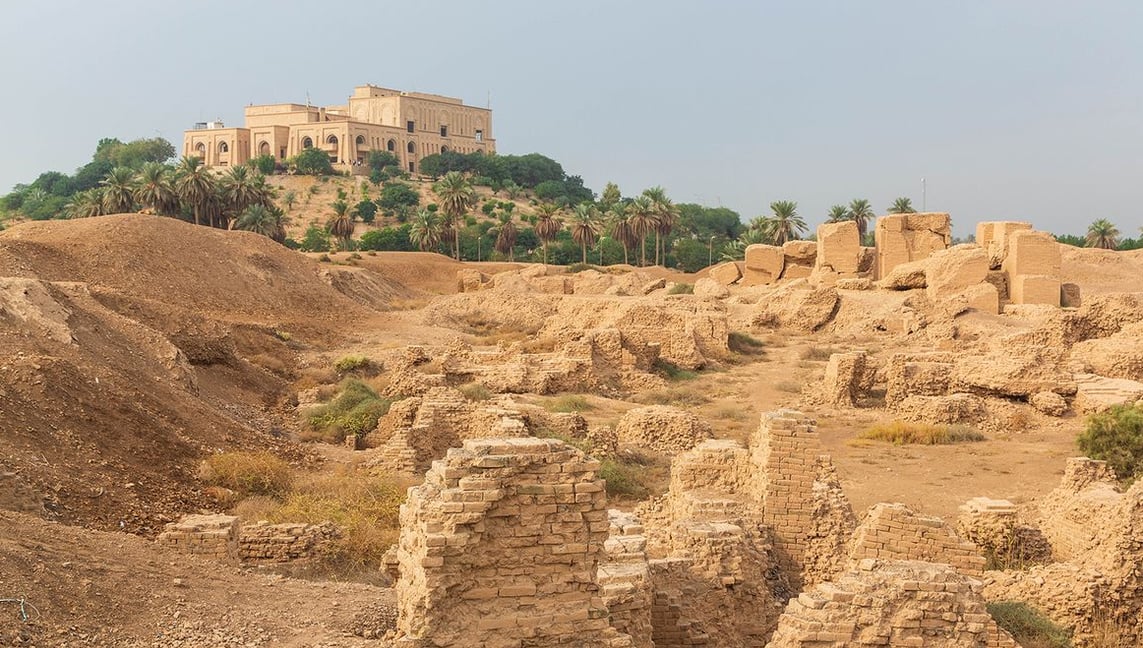
At its height, Babylon was the largest city on earth. Sitting along the Euphrates River in what is now modern Iraq, it boasted towering ziggurats, monumental city walls wide enough for chariots to pass on top, and the legendary Hanging Gardens — one of the Seven Wonders of the ancient world. Its wealth was staggering, its religious institutions deeply embedded in civic life, and its military reputation formidable. For centuries, Babylon stood as the defining symbol of power in the ancient Near East. Yet in 539 B.C.E., it fell in a single night. Understanding why requires looking not just at the armies that marched against it, but at what was happening inside the city long before Persian soldiers ever arrived at its gates.
Nebuchadnezzar Built an Empire That Demanded Loyalty
The Neo-Babylonian Empire reached its peak under King Nebuchadnezzar II, who reigned from 605 to 562 B.C.E. He was a military genius and a prolific builder who transformed Babylon into a showcase of civilization. His campaigns stretched across Mesopotamia and into the Levant — he conquered Jerusalem, destroyed the First Temple, and deported much of the Jewish population to Babylon in what became known as the Babylonian captivity. At home, he poured resources into temples, palaces, and public works. Crucially, he maintained the favor of Marduk’s priesthood, the religious establishment that held enormous influence over the Babylonian population. His rule was not without brutality, but it was stable. The empire he handed down, however, would not stay that way for long.
Read more
The Succession Problem That Unraveled Everything
After Nebuchadnezzar’s death, the throne passed through a rapid and destabilizing series of rulers. In just over two decades, five kings came and went — some deposed, some assassinated. Political violence and court intrigue became the norm rather than the exception. This kind of instability at the top had consequences that radiated throughout Babylonian society. Administrative decisions stalled. Military loyalty became uncertain. The priesthood, which had been a reliable partner to Nebuchadnezzar, grew skeptical of rulers who could be removed without warning. By the time Nabonidus seized power in 556 B.C.E., the imperial machinery was already under strain, and he would do very little to ease it.
Nabonidus Made One Critical Error
Nabonidus was an unusual ruler by any measure. An antiquarian obsessed with ancient religious sites, he devoted considerable energy to restoring old temples and promoting the moon god Sin above all other deities — including Marduk, the patron god of Babylon and the centerpiece of its religious identity. This was not a minor theological disagreement. In Babylonian culture, the king’s relationship with Marduk was central to his legitimacy. The annual New Year festival, the Akitu, required the king to physically clasp the hands of Marduk’s statue to renew his divine mandate. Nabonidus neglected this ritual for years at a stretch. To the Babylonian priesthood and the population they influenced, this was a profound failure of kingship — not just offensive, but destabilizing in ways that eroded popular confidence in the regime.
He Left the City to His Son
Making matters worse, Nabonidus spent roughly a decade away from Babylon, residing at the Arabian oasis of Tayma while leaving his son Belshazzar to govern the capital as regent. The Nabonidus Chronicle, a Babylonian administrative text, records this extended absence matter-of-factly, which itself suggests how normalized the dysfunction had become. Belshazzar held real authority during this period, but he lacked his father’s title and the full weight of royal legitimacy. This split in leadership created ambiguity at exactly the moment when Babylon needed clarity. The Hebrew Bible’s account of Belshazzar’s feast — where sacred vessels looted from Jerusalem’s temple were used for a royal banquet — captures something historians recognize in the broader record: a ruling class that had grown dangerously disconnected from the expectations of those it governed.
Religious Discontent Was a Political Weapon
It would be a mistake to treat Babylon’s religious tensions as purely spiritual matters. In the ancient Near East, temples were economic institutions. Babylonian temples owned land, employed workers, and distributed resources throughout the community. The priesthood of Marduk wielded influence that blurred the line between religious authority and political power. When Nabonidus elevated Sin and relocated cult statues from surrounding cities to Babylon — ostensibly for their protection, but experienced as a kind of religious consolidation — it disrupted these local networks. Communities that had organized their civic and economic lives around their own temples now found those institutions subordinated to Nabonidus’s religious agenda. This was not just unpopular; it actively generated constituencies who had practical reasons to welcome a change in leadership.
Cyrus the Great Understood This Better Than Anyone
Cyrus II, founder of the Achaemenid Persian Empire, was a military leader of extraordinary strategic intelligence. By 539 B.C.E., he had already conquered Media, Lydia, and much of the Iranian plateau. When he turned toward Babylon, he did not simply march an army to the walls. He waged a deliberate political campaign alongside his military one. Persian propaganda presented Cyrus as the chosen agent of Marduk himself — the god whom Nabonidus had neglected — sent to restore proper worship and order. This framing was not incidental. It was designed to neutralize resistance before combat ever began, by telling Babylonians that the incoming conqueror was more religiously legitimate than their own king. Whether people fully believed it matters less than the fact that it removed the motivation to fight to the death.
The Night Babylon Was Taken
Ancient sources — including Herodotus, the Nabonidus Chronicle, and later accounts — describe the fall of Babylon as remarkably swift. Persian forces reportedly exploited the Euphrates River, which ran through the city. By diverting or lowering the water level, they were able to march troops along the riverbed and enter beneath the walls after dark. The city was celebrating a festival at the time, according to some accounts, which may have reduced alertness among the guards. Whatever the precise operational details, the result was the same: Babylon fell in a single night, in 539 B.C.E., without the kind of protracted siege that such a heavily fortified city might have been expected to require. Nabonidus was captured shortly after. Belshazzar, according to biblical sources, was killed.
What the Cyrus Cylinder Actually Says
Among the most significant pieces of archaeological evidence from this period is the Cyrus Cylinder, a clay barrel inscription discovered in Babylon in 1879 and now housed at the British Museum. Written in Babylonian cuneiform, it records Cyrus’s conquest and his subsequent policies. The cylinder describes Marduk choosing Cyrus to restore proper worship and portrays the Persian king as a liberator rather than a conqueror. It documents his orders to allow deported peoples — including the Jewish exiles — to return to their homelands and rebuild their temples. Scholars debate how much of this is propaganda versus policy, but the cylinder’s existence confirms that Cyrus made a deliberate effort to present himself as a legitimate successor to Babylonian traditions rather than their destroyer. That choice shaped how the transition of power unfolded on the ground.
Babylon Did Not Disappear After the Conquest
One of the most commonly misunderstood aspects of Babylon’s story is what happened after it fell. The city was not sacked or burned. Under Persian rule, Babylon became a regional administrative capital and remained economically significant. Its temples continued to operate. Persian kings, including Cyrus and his successors, participated in Babylonian religious ceremonies and adopted some of the trappings of Babylonian kingship to maintain legitimacy in the region. The Jewish exiles who had been brought to Babylon under Nebuchadnezzar were permitted to return to Jerusalem — an event documented both in the Hebrew Bible and corroborated by the Cyrus Cylinder. Babylon’s fall was the end of an independent political entity, but the city itself continued as a functioning urban center for centuries, only gradually declining as Alexander the Great’s ambitions and later neglect took their toll.
The Biblical Record and Historical Evidence Align More Than Expected
The fall of Babylon occupies significant space in the Hebrew Bible. The prophet Isaiah, writing generations earlier, predicted Babylon’s downfall. The book of Daniel records the writing on the wall episode — the mysterious Aramaic inscription interpreted as a divine sentence against Belshazzar’s kingdom. The book of Revelation later used Babylon as a symbolic archetype for corrupt imperial power, its sudden fall described in vivid terms. What makes the biblical account interesting to historians is how closely some of its details correspond to what secular records confirm: the feast during the city’s last night, the role of Belshazzar, the rapid collapse of resistance. The correspondence is not perfect across all sources, but the broad outlines of political failure, religious tension, and swift conquest appear consistently across texts from very different traditions.
The Pattern Babylon Fits
Babylon’s trajectory follows a pattern recognizable across ancient and modern history. An empire rises through military strength and administrative competence. It accumulates wealth that funds culture and monumental construction. Leadership transitions introduce instability. A ruler emerges who prioritizes personal or ideological goals over the broad coalition of interests that holds the state together. Discontent spreads among groups — in this case, priests, merchants, and ordinary citizens — whose cooperation the regime had previously taken for granted. A rival power, sensing the vulnerability, enters not just militarily but politically, offering an alternative that disaffected insiders find more appealing than continued resistance. The empire does not collapse from the outside alone; it becomes too divided internally to mount an effective defense. What made Babylon memorable is the speed and completeness of the ending — and how avoidable it looked in retrospect.
Why This Story Still Gets Studied
Historians, archaeologists, and theologians continue to return to Babylon’s fall because it compresses so many dynamics into a legible historical episode. The available sources — the Nabonidus Chronicle, the Cyrus Cylinder, Herodotus, the Hebrew Bible — offer multiple perspectives on the same events, allowing scholars to triangulate what actually happened and why accounts differ. The role of religion in political legitimacy, the consequences of neglecting institutional relationships, the military value of propaganda alongside force: these are themes that appear across civilizations and eras. Babylon’s fall is not just an ancient curiosity. It is a well-documented case study in how states that appear permanent can unravel with surprising speed when the internal foundations that held them together are quietly eroded over years before any external threat arrives.