The Maître D’ Who Improvised a Legend
Nachos didn’t come from a test kitchen or a corporate food lab. They came from a man who refused to let a group of hungry strangers go home empty-handed.
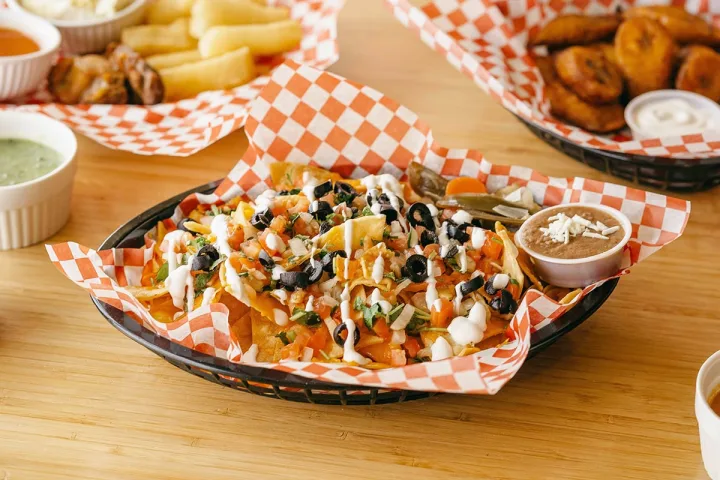
Ignacio Anaya was the maître d’ at the Victory Club in Piedras Negras, a Mexican border town. His regulars called him Nacho—a common nickname for Ignacio in Spanish. One evening in the early 1940s, a group of diners showed up after closing time. The cooks were gone. Anaya scrounged through the kitchen and built something from what he found: fried tortilla chips, melted colby cheese, jalapeño peppers. He called the plate “Nacho’s especiales.” The customers loved it.
The Victory Club added it to the menu. The name got shortened. Nacho’s especiales became nachos—a word now known from stadium concession stands to late-night fast food runs, all tracing back to one man’s refusal to say sorry, we’re closed.
A Grandmother With a Green Thumb
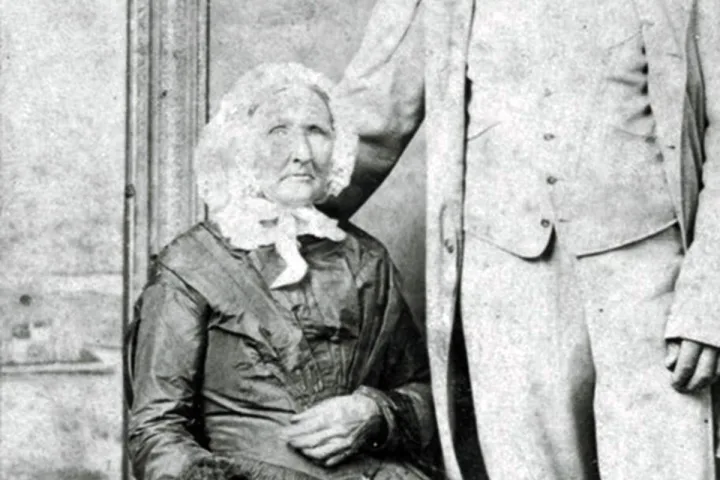
Maria Ann Smith wasn’t a botanist. She was an Australian woman who farmed 24 acres with her husband Thomas in the mid-1850s and stumbled onto something that would outlast her by well over a century.
The apple that bore her name first appeared on her land in 1868. The prevailing theory is that it mutated from the scattered remnants of old French crab apples near the property. Smith died just two years after that first crop. She never saw the cultivar go global. Local orchardists kept growing the tart green apples, and by 1895 they were being exported under the name “Granny Smith’s Seedling”—the nickname her grandchildren had given her, now attached to one of the world’s most recognizable fruit varieties.
Read more
The Doctor Who Thought Vegetables Were Dangerous
James H. Salisbury wasn’t a chef. He was a physician with strong opinions about digestion and a gift for naming things after himself.
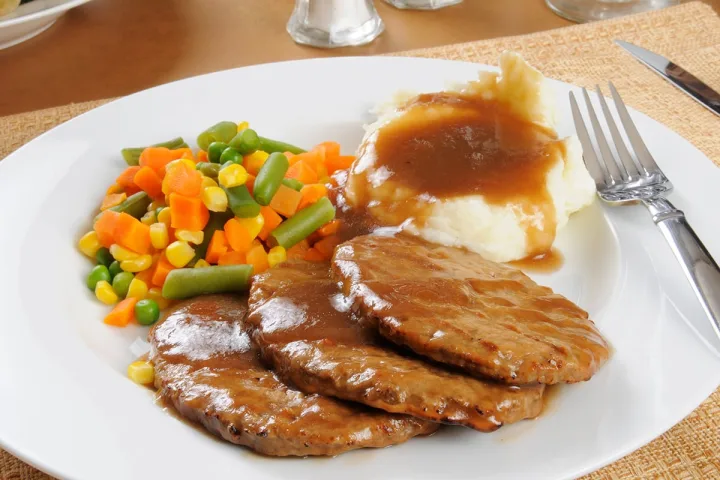
Salisbury was an early believer in germ theory, but his version of the science went sideways in places. He believed vegetables released toxins into the digestive system. His solution was beef. Ground beef, shaped into a patty, soaked in gravy, served as medicine. He first described the dish in his 1888 book as “muscle pulp of beef”—a phrase that somehow failed to catch on. The name Salisbury steak did.
He formalized the recipe in 1897 and died in 1905. The dish outlived his questionable nutritional theories by about a hundred years, graduating from doctor’s orders to frozen TV dinner staple.
A Painting That Became a Plate
In 1950, a Venetian restaurateur named Giuseppe Cipriani faced a specific problem: one of his regular customers at Harry’s Bar in Venice had been told by her doctor to avoid cooked meat entirely. Cipriani didn’t want to lose her business.
He invented a dish of thinly sliced raw beef, draped over a plate and finished with Parmesan, lemon, and olive oil. For the name, he looked to an exhibition at the Doge’s Palace, where the works of Italian Renaissance painter Vittore Carpaccio were on display. Carpaccio was known for his deep reds and stark whites. The raw beef against white sauce matched the palette almost exactly.
The dish became one of the most copied starters in fine dining. Raw tuna carpaccio, beet carpaccio, zucchini carpaccio—the word now applies to almost anything sliced thin and served cold. Vittore Carpaccio painted altarpieces in the 1490s. He probably didn’t see that coming.
The Minister Who Wanted to Kill Your Appetite
Sylvester Graham was a 19th-century Presbyterian minister with a passionate distrust of white flour, red meat, and anything that tasted too good. He called himself a dietary reformer. His critics had other words for him.
Graham believed that rich, highly seasoned foods inflamed the body’s baser impulses. His answer was a coarse whole-wheat flour he developed himself, which he used to produce a cracker in 1829. The original graham cracker was thin, savory, and designed less as a snack than as a tool for moral discipline.
Other bakers saw a market opportunity. A baker named J. Thompson Gill created the first sweet version in 1881, and Nabisco eventually scaled it into a mass-market product. Today’s graham cracker—sweet, cinnamon-tinged, the foundation of s’mores everywhere—would have horrified the man whose name it carries.
The Mail Carrier and the Tree He Almost Cut Down
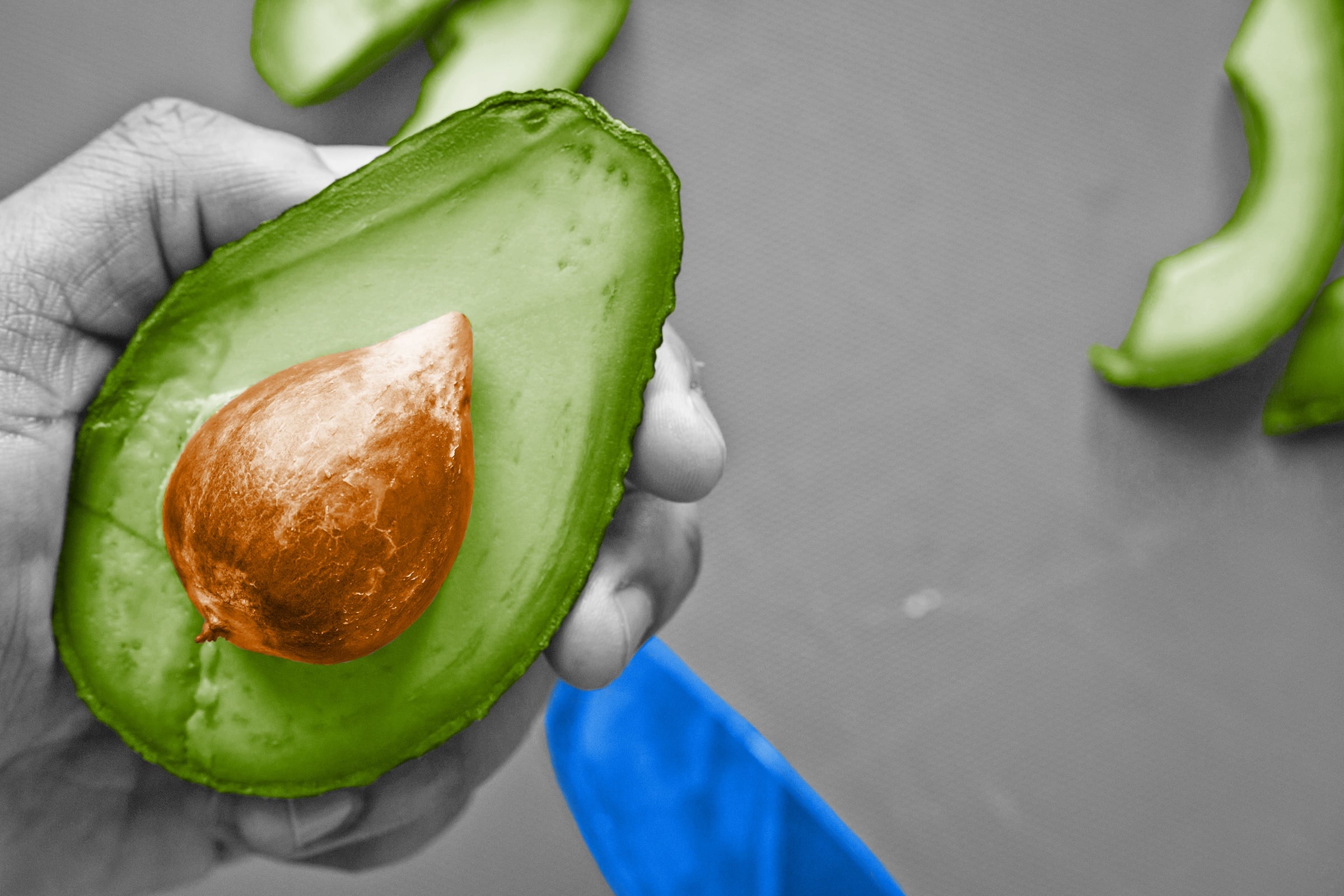
Rudolph Hass delivered mail for a living. In the 1920s, he also grew avocados on a California property, buying seeds from a horticulturist named Albert Raymond Rideout. One of those trees sprouted a variety nobody recognized.
The Fuerte was the dominant avocado then—smooth-skinned and mild. Hass’s mystery tree produced something rougher and richer. He planned to chop it down. His kids stopped him. They preferred the taste of this new variety over everything else on the property, and their opinion won.
Hass patented the cultivar in 1935 and named it after himself. He died in 1952 with no idea that his children’s taste preference would eventually account for 95% of the American avocado market. The Hass now outsells every other variety in the country by an almost absurd margin.
The Chef Who Ran Out of Ingredients and Made History
Caesar Cardini was not Julius Caesar. This comes as a surprise to more people than it should.
Cardini was an Italian chef who emigrated to North America in the 1910s and built a restaurant in San Diego. Prohibition arrived in 1920, and he moved operations to Tijuana, where a restaurant could serve alcohol and draw American customers across the border.
On a busy Fourth of July weekend in 1924, the kitchen ran thin—romaine, olive oil, raw egg, croutons, Parmesan, Worcestershire sauce. He tossed it together tableside. Customers watched and asked what it was. He gave them his name.
Caesar Cardini’s salad became the Caesar salad, and it has been misattributed to an ancient Roman dictator ever since. Cardini’s daughter confirmed the origin story. The man who actually invented it ran a restaurant in Tijuana and was simply trying to feed a crowd with what he had left.