The Event That Split DC’s Fanbase in Two
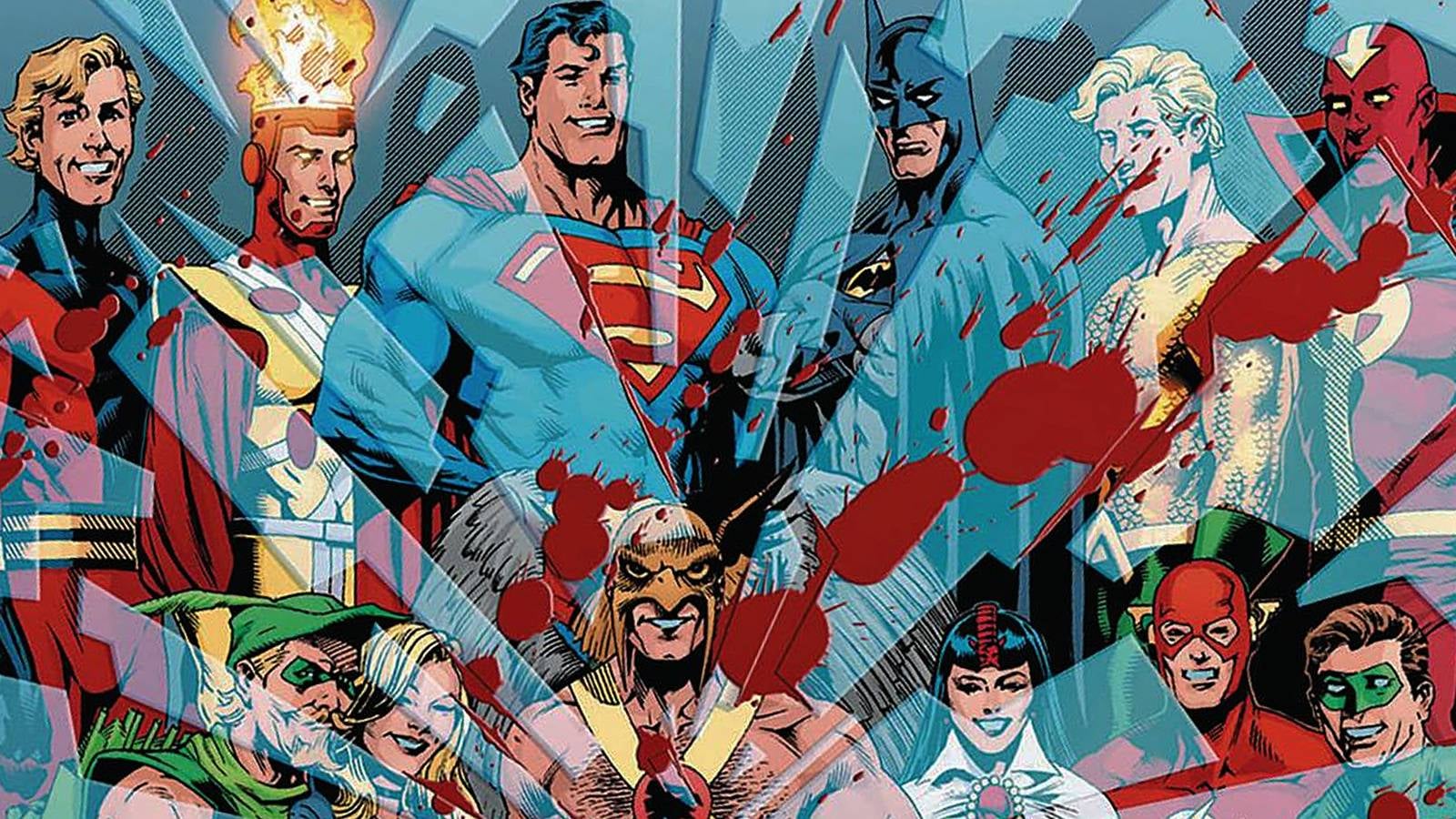
Twenty-two years later, Identity Crisis still starts arguments. The seven-issue DC crossover from 2004 remains one of the publisher’s most hotly contested stories — praised by some for its emotional gutpunch, condemned by others for its gratuitous darkness. Both sides have a point.
The story opens with a murder. Sue Dibny, wife of the Elongated Man, is killed in her home. What follows is a full DC Universe detective story, the costumed heroes of the Justice League scrambling to find her killer while more loved ones come under threat. It could have been a tight, elegant thriller. It is messier than that, burdened by a flashback involving Doctor Light that mistakes shock for depth. That sequence has, rightfully, aged badly.
Why the Early 2000s Got Weird
The 1990s had a reputation for edginess, but superhero comics of that era still operated within limits. The early 2000s loosened those limits fast. Writers wanted their stories to feel realistic, to strip away the optimism and reveal something grittier underneath. Some of those efforts produced genuine masterpieces. A lot of them produced Identity Crisis.
The impulse wasn’t wrong. Superhero stories needed to grow up in some ways. But grown-up doesn’t have to mean grim, and Identity Crisis occasionally confused the two. Where it worked, it worked because of character, not because of darkness for its own sake.
Read more
A Robin With Something to Lose
To understand why Identity Crisis matters for Tim Drake, you have to understand what made him different from the Robins before him. Dick Grayson lost his parents young. His origin practically mirrors Bruce Wayne’s, which is why their partnership clicked so completely. Jason Todd’s story ended even more violently, shot dead by the Joker, later resurrected as the Red Hood, a ghost who never fully came back.
Tim Drake arrived with a father still alive. Jack Drake wasn’t a distant figure or a footnote. He was present, complicated, real. That changed the texture of Tim’s relationship with Batman entirely. Bruce Wayne wasn’t a surrogate father in the same way. He was a mentor, a partner, something harder to define. For years, Tim got to have both: the cape and the man who raised him.
The Phone Call That Ended Everything
Captain Boomerang is not a villain who usually carries emotional weight. He’s a C-lister, a punchline, the kind of rogue you dispatch between the real threats. Which makes what happens next so brutal. He’s sent to Jack Drake’s home. Jack, alone, realizes he’s in danger. He grabs a gun.
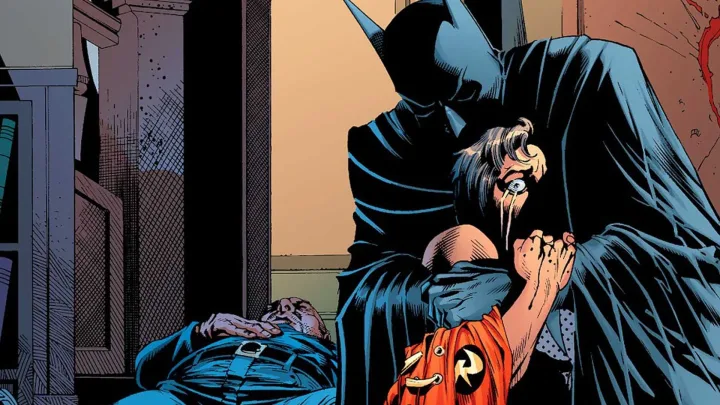
Robin is in the Batmobile, speeding toward the house, listening over the phone. Not watching. Listening. His father’s voice, the sounds of a struggle, the terrible silence that follows. Batman drives faster. They don’t make it. Jack and Boomerang kill each other. When the Dynamic Duo arrives, it’s already over.
Robin listened over the phone as his father fought for his life, and there was nothing he could do.
The Weight Tim Drake Now Carries
That scene accomplished what most of Identity Crisis failed to: earned grief. Not manufactured darkness, not shock for the sake of it, but a loss that restructures a character from the inside out. Tim Drake became an orphan. He stepped into the same shadow that had shaped Bruce Wayne since childhood.
Their relationship shifted because of it. The gap between mentor and protege closed in a specific, painful way. They now shared something that couldn’t be spoken around, only acknowledged. Batman understood that particular silence. Tim didn’t need him to explain it.
Identity Crisis carries real baggage. You can’t discuss it without discussing what it gets wrong. But for Tim Drake, and for the Dynamic Duo as a concept, Jack Drake’s death remains one of the most consequential moments in modern DC history. A bad story can still contain a great scene. This one did.