The Oldest Argument in Pet Ownership
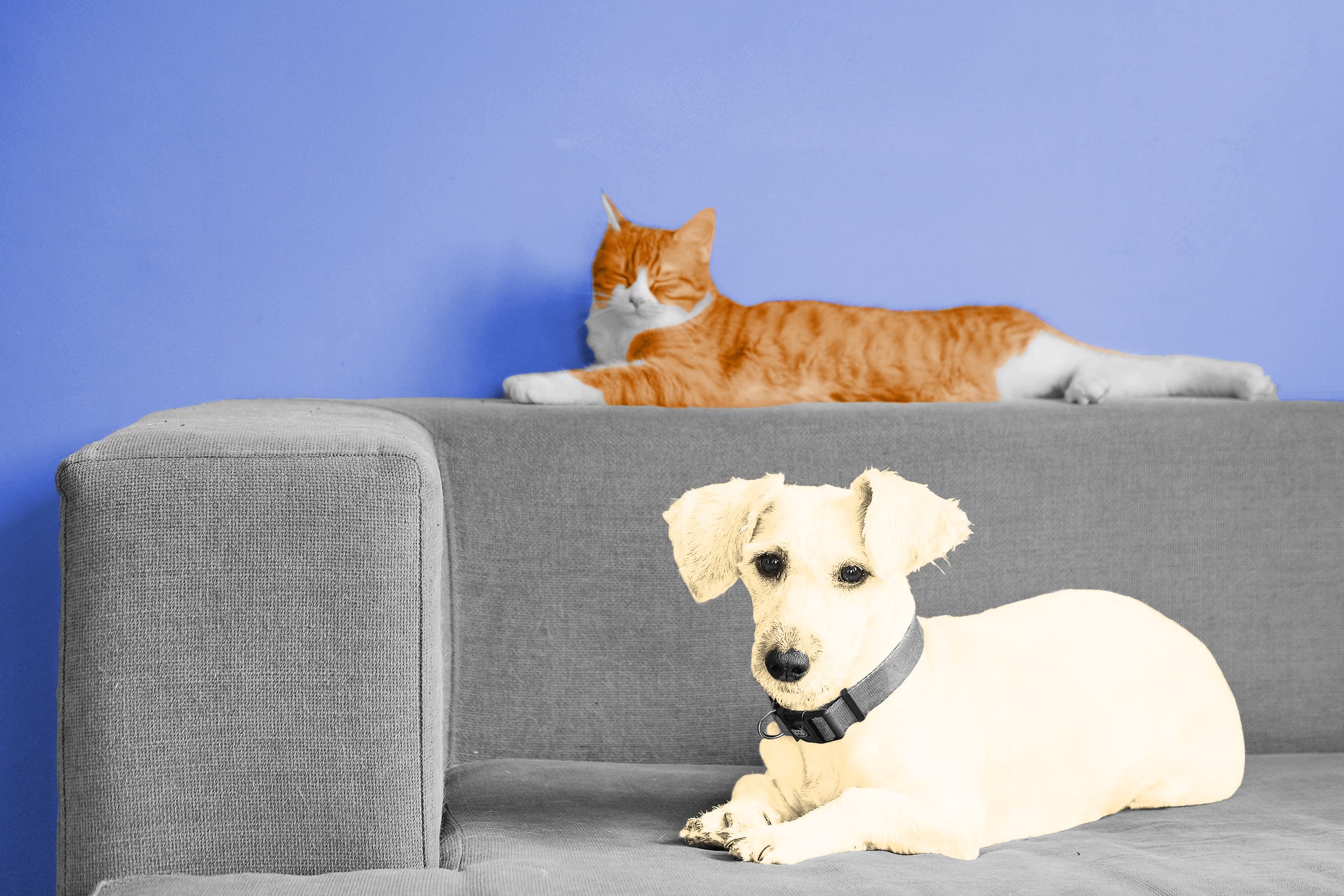
Dogs fetch sticks and sit on command. Cats open cabinet doors and judge you silently from across the room. The debate over which animal is smarter has never really been about science. It’s been about allegiance. But over the past few decades, researchers studying animal cognition have gotten serious about answering the question with measurable data instead of anecdotes.
The problem: measuring animal intelligence isn’t like handing out a test. No IQ score, no single ranking. Researchers instead look at clusters of abilities: problem-solving, spatial memory, social learning, adaptability. And they factor in what each animal evolved to do, because evolution built very different brains for very different lives.

What’s Actually Inside Those Skulls
One early measure researchers reach for is the encephalization quotient, essentially brain size relative to body size. But raw size tells only part of the story. What neuroscientists really care about is the neuron count in the cerebral cortex, the region tied to decision-making, flexible thinking, and memory. A 2017 study found dogs have roughly 530 million cortical neurons. Cats clock in at about 250 million.
That’s a significant gap. More cortical neurons generally correlate with greater behavioral flexibility, the ability to adapt and respond to novel situations. Cats’ brains, though, are highly folded, packing more surface area into a compact space. That structure supports rapid sensory processing and precise motor control, exactly what an ambush predator needs. A brain optimized for one thing can outperform a larger one every time, within its specific domain.
Read more
Two Animals, Two Entirely Different Problem Solvers
In laboratory tests, dogs shine brightest when humans are involved. They follow pointing gestures to locate hidden food with a consistency that surprises researchers who study other species. Even untrained puppies respond to human eye direction. The most famous case: a Border Collie named Chaser who learned to identify more than 1,000 object names and could sort them by category. Dogs aren’t just trainable. They’re wired to read us.
Cats take a different route entirely. Give one a latch to manipulate or an obstacle course to figure out, and it can show real persistence and mechanical ingenuity. The catch is motivation. In lab settings, cats are less reliably driven by food rewards and need longer to settle into unfamiliar environments. That makes them harder to study, which has historically skewed how their intelligence gets measured and reported.

Memory, Emotion, and Reading the Room
Dogs track social information with precision. They recognize familiar faces and voices, retain learned commands for years, and read human emotional expressions. When confronted with something new and uncertain, they look to their owners for guidance, a behavior researchers call social referencing. It’s not blind loyalty. It’s a sophisticated social strategy their 11,000-year partnership with humans helped wire in.
Cats are less demonstrative, but they’re paying attention. Research shows they distinguish their owner’s voice from a stranger’s and respond differently to emotional tone: relaxed and affectionate toward warm voices, avoidant toward harsh ones. They also master household routines with eerie accuracy, anticipating feeding times before any cue is given. Their spatial memory is exceptional. They hold detailed mental maps of their territory and remember the locations of food and safe ground for extended periods. It’s the intelligence of a solitary hunter who survives by knowing its environment cold.

The Verdict Nobody Was Going to Love
By the numbers, dogs have the edge in cognitive flexibility. Higher cortical neuron counts, deep social attunement, and a readiness to engage with human communication that no other species matches so consistently. For tasks involving cooperation, language-like understanding, and reading people, dogs win.
Cats win at something else entirely. Independent cognition, environmental awareness, mechanical problem-solving. Refusing to perform on command isn’t stubbornness or stupidity. It’s the behavior of an animal whose survival never depended on pleasing anyone. Science doesn’t hand a trophy to either side. Instead it shows two animals shaped by completely different evolutionary pressures, each intelligent in the way their history demanded.