The Myth That Just Won’t Die
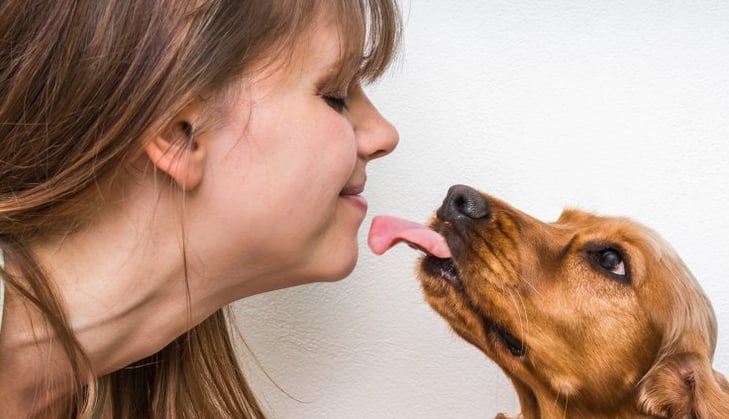
Ask almost anyone whether a dog’s mouth is cleaner than a human’s and you’ll get a confident yes. It’s one of those facts that gets passed around at dinner tables and dog parks with the certainty of settled science. People let their dogs lick their faces, their wounds, their children’s hands — because everyone knows dogs have clean mouths. The problem is that this widely held belief is wrong, and the gap between the myth and the reality is wide enough to be genuinely surprising. Understanding what actually lives inside your dog’s mouth doesn’t mean you have to stop loving your pet. It just means you’ll have a much clearer picture of what you’re actually dealing with.
What the Numbers Actually Show
According to the American Kennel Club, a dog’s mouth contains more than 600 distinct types of bacteria. That number is striking on its own, but it becomes even more interesting when you put it next to the human figure: researchers have identified approximately 615 types of bacteria in the average human mouth. In other words, dogs and humans are essentially tied when it comes to oral bacterial diversity. The mouths are different ecosystems — the specific species don’t overlap much — but the sheer quantity of microbial life is roughly equivalent. The idea that dogs have some biologically superior, self-sanitizing mouth simply doesn’t hold up against the data.
Read more
Ancient Civilizations Believed It Too
The faith in dog saliva is not a modern misconception. Both ancient Greek and ancient Egyptian cultures believed that dog mouths carried genuine healing power. Dogs were kept at temples and healing sanctuaries, and it was considered beneficial to allow them to lick wounds. Egyptian art and texts reference this practice, and in ancient Greece, dogs were associated with Asclepius, the god of medicine. The belief persisted for centuries across multiple cultures and continents. In some ways, these ancient practitioners were not entirely wrong — they had simply latched onto a partial truth and stretched it far beyond what the evidence supported.
The Protein That Does Real Work
Canine saliva is not entirely without useful properties. Dog mouths produce proteins called histatins, which have demonstrated antimicrobial and antifungal activity and can help combat certain types of infection. This is real biology, not folklore. When a dog licks a wound, histatins do enter the picture and may offer some limited benefit. However, the same is true of human saliva. Humans also produce histatins, and most other mammals do as well. So while dog saliva has a legitimate biological function, it is not unique or superior. It is simply one example of a common mammalian trait, not evidence of any special cleansing power specific to dogs.
The Bacterium That Changes Everything
Most of the bacteria in a healthy dog’s mouth pose little to no threat to humans. The two microbial communities — canine and human — are different enough that cross-infection is uncommon under normal circumstances. But there are exceptions, and some of them are severe. Healthy dogs and cats routinely carry a bacterium called Capnocytophaga canimorsus in their mouths. For most people with intact immune systems, exposure to this bacterium causes no problems at all. The danger appears when it enters the bloodstream through a break in the skin — a bite, a scratch, or even an open wound that gets licked. At that point, the consequences can escalate rapidly and catastrophically.
Julie McKenna Lost Her Limbs to a Puppy Lick
In 2007, a woman named Julie McKenna suffered a mild burn on her foot — the kind of injury that ordinarily heals without incident. Her puppy licked the wound. Within a short time, Capnocytophaga canimorsus had entered her bloodstream. What followed was a medical emergency of an extreme kind: septic shock, organ failure, and her limbs turning black from the tissue damage. By the time the crisis had run its course, McKenna had lost her left leg below the knee, part of her right foot, and every one of her fingers and toes. The puppy was not sick. The lick was affectionate. The wound was minor. None of that mattered once the bacterium found its way inside.
Greg Manteufel’s Case Made National News in 2019
More than a decade after the McKenna case, a strikingly similar story emerged. In 2019, a man named Greg Manteufel was reported by Today as having required the amputation of his nose, his hands, and his legs after his dog licked him. Like McKenna, Manteufel was not bitten. The exposure was through ordinary contact — the kind that happens between dogs and their owners dozens of times a day. His case drew wide attention because it illustrated something that many people find difficult to accept: a beloved pet behaving normally can, in rare circumstances, trigger a life-altering medical emergency. The dog was not dangerous. The outcome was devastating.
How Often Do C. Canimorsus Infections Turn Fatal
Capnocytophaga canimorsus infections are rare. That point is worth emphasizing, because the cases that reach the news are extreme outliers. But when infections do occur, the outcomes are disproportionately severe. One study found that 26 percent of people with confirmed C. canimorsus infections died. That is a fatality rate that would be considered alarming in almost any other infectious context. People who are immunocompromised — due to age, illness, medications, or other factors — face the highest risk. But as the McKenna and Manteufel cases demonstrate, otherwise healthy people are not entirely exempt. The rarity of infection is real; so is the severity when it happens.
Pasteurella Multocida and the Meningitis Connection
Capnocytophaga is not the only concerning bacterium in a dog’s oral ecosystem. Dogs commonly carry Pasteurella multocida, a pathogen that can infect humans and has been linked in some cases to meningitis, the potentially fatal inflammation of the membranes surrounding the brain and spinal cord. This transmission risk is not merely theoretical — it has been documented in medical literature. Dog bites are the more common vector, but licks to open wounds or mucous membranes can also create exposure. Research estimates that between 10 and 15 percent of dog bites lead to some form of bacterial infection, a figure that underscores how efficiently canine oral bacteria can establish themselves in human tissue.
Cats Are Part of This Conversation Too
Dogs tend to get most of the attention in discussions about pet-transmitted bacteria, but cats belong in the same conversation. Healthy cats also carry Capnocytophaga canimorsus, and the infection risk from cat contact follows similar patterns to that of dogs. Cat bite infection rates are notably higher than dog bites — roughly half of cat bites result in infection, compared to the 10 to 15 percent figure for dog bites. Cat teeth are narrow and sharp, creating deep puncture wounds that are harder to clean and more likely to trap bacteria below the skin’s surface. If anything, the case for taking feline oral bacteria seriously is even more straightforward than the canine one.
What This Means for Everyday Dog Owners
None of this is an argument against owning dogs or allowing normal affectionate contact. The overwhelming majority of dog licks result in nothing more than a wet face. The bacterial load in a dog’s mouth, while substantial, is mostly composed of species that do not infect humans. The dangerous pathogens are present, but exposure alone is not the same as infection, and infection — particularly the severe kind — remains genuinely uncommon. The practical takeaway is straightforward: keep open wounds away from dog mouths, be more cautious if you are immunocompromised, and treat dog bites with appropriate medical attention rather than dismissing them. The myth of the clean dog mouth is false, but the reality is not cause for alarm — just for accurate information.